
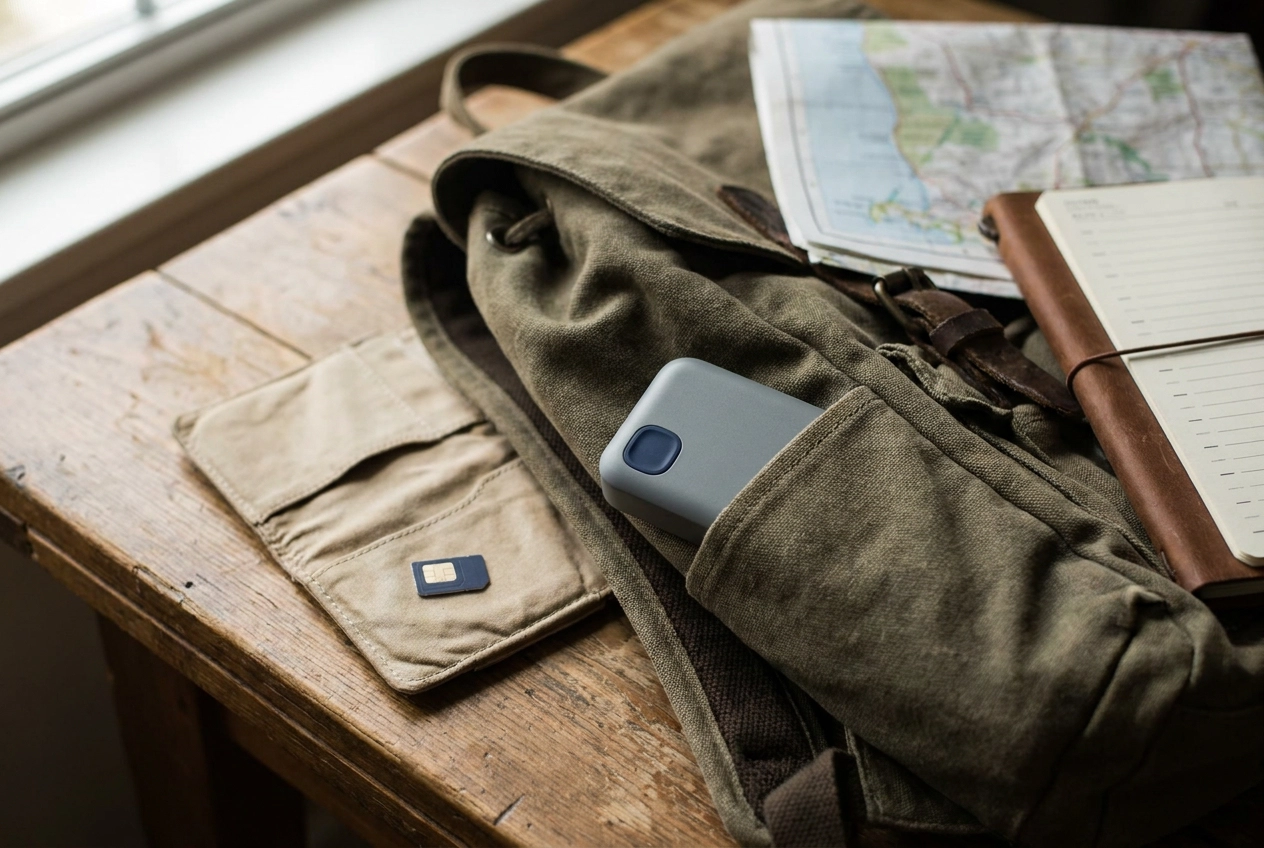

You packed your bag. You booked your SIM. You think you’re ready. But what happens when your luggage ends up in a different city, your rental gear goes missing, or your travel buddy wanders off in an unfamiliar town? These are the moments most travel guides forget to prepare you for.
Here’s the thing: staying connected while you travel is about more than just having data on your phone. It’s also about knowing where your stuff is at all times. That’s where pairing EzySim with EzyTag changes the game completely.
In this post, we’re walking you through four real travel scenarios where this combination seriously comes in handy. We’ll also cover how your privacy is protected, what the whole setup actually costs, and how to get everything ready before you leave home. Whether you’re road tripping across Australia or flying overseas, by the end of this you’ll have a clear picture of how to travel smarter without overcomplicating things. Let’s get into it.
The Part of Travel Nobody Talks About
There’s a particular kind of anxiety that travels with you whether you’re ready for it or not. It’s the creeping worry as you watch the baggage carousel go round one more time. It’s realising your hired surfboard isn’t where you left it. It’s standing in a packed night market wondering which direction your travel companion wandered off to. Nobody books a holiday thinking about these moments, but most travellers have lived at least one of them.
It’s no coincidence that Bluetooth trackers have become standard packing list items. Millions of travellers have already decided they want their belongings findable. The technology clearly works, but here’s what the packaging doesn’t tell you: a tracker with no data connection is just a small piece of hardware sitting silently in your bag. Real-time location updates depend on real-time connectivity. Without it, you’re not tracking anything.
This creates a problem most travellers solve badly. They grab a standalone tracker, then scramble for a roaming SIM at the airport, ending up with two separate services, two sets of logins, and a roaming bill that stings when they get home. If you’re weighing up your options, it’s worth reading how prepaid eSIM costs actually stack up in Australia before committing to anything.
EzyTag changes that equation. Paired with an EzySim plan, it becomes a single, connected travel setup where your data keeps your tracking active and your essentials stay visible, wherever you are.
The scenarios below show exactly what that combination looks like in practice.
Scenario 1: Your Bag Goes One Way, Your Flight Goes Another
Picture this: you’ve just landed after a tight connection, you’re tired, and you stand at the baggage carousel watching bag after bag appear. Yours isn’t one of them. According to SITA’s 2026 Baggage IT Insights, delayed bags account for roughly 70% of all mishandling cases, making this one of the most common stressful moments in travel.
Instead of joining the queue at the lost property desk, an EzyTag tucked inside your checked bag tells you exactly where it is the moment it moves. You can see whether it’s still at the transfer airport, sitting in a handling depot, or already on the next flight, without waiting on hold or filling out forms.
That real-time location update only lands on your phone if your device has active data. This is where a live EzySim plan quietly does the heavy lifting in the background, keeping location pings flowing without the bill shock that typically comes with international roaming. If you’re wondering what to look for when comparing your options, this guide to mobile plans with international calls in Australia is a useful starting point.
It’s worth noting that personal GPS trackers already represent 38% of the global GPS tracking market (Future Market Insights, 2026), which reflects how broadly everyday travellers have adopted this kind of solution.
For longer international trips, EzySim’s Cool plan at $39 for 60GB over 90 days offers continuous connectivity with no lock-in contract, so you stay covered from departure to return without overcommitting.
Scenario 2: Hired Gear, High Stakes
Lost luggage is stressful, but at least your bag is someone else’s problem to track down. Rental gear is different. When a hired surfboard goes missing from the beach or a campervan disappears from a remote trailhead carpark, the financial liability lands squarely on you.
Picture any of these: skis left outside a mountain lodge while you grab lunch, a kayak rented for a week sitting at a campsite you can’t quite remember, a hire vehicle parked somewhere in a sprawling national park. Expensive equipment, unfamiliar locations, and no easy way to confirm it’s still where you left it.
Attaching an EzyTag to rental gear or a hired vehicle gives you a live location reference you can check from your phone. That’s useful for theft prevention, but honestly it’s just as handy for the everyday stuff, like retracing your steps after a big day out when you can’t remember exactly which beach access point you used.
For the tracking to stay useful, your device needs consistent data pushing location updates. EzySim’s Beauty plan at 35GB for 30 days covers a solid month of monitoring without surprise costs mid-trip.
The affordability of personal trackers like EzyTag has genuinely shifted in recent years. GNSS chipset costs have fallen roughly 38% since 2021, meaning this technology is no longer the exclusive territory of commercial fleet operators. It’s accessible kit for everyday travellers now.
Pairing one EzySim plan with EzyTag also removes the need for a separate roaming SIM and a standalone tracker subscription, two costs that stack up quickly across a multi-week trip.
Scenario 3: Keeping Your Group Together (Even When You’re Not)
Group travel is a different beast. Whether you’re navigating a busy festival with mates, splitting up at a market with your partner, or keeping track of kids who sprint off the moment you arrive somewhere new, the constant back-and-forth of “where are you?” messages chips away at the fun pretty quickly.
EzyTag cuts through that friction with passive location awareness. Rather than pinging each other every ten minutes, group members can simply check a shared location without anyone needing to stop, unlock their phone, and type out a reply. It’s low-effort coordination that keeps everyone loosely connected without the noise.
That said, tracking alone doesn’t cover every situation. Sometimes you need to actually talk or message someone fast. EzySim’s unlimited Australian calls and texts on eligible plans give your group a reliable voice and messaging fallback when real-time coordination matters, complementing the tracking layer rather than replacing it.
Australian travellers are clearly warming to this kind of setup. The Australia GPS tracking device market is growing at 7.3% CAGR through 2031, which signals that location-sharing tools are becoming a normal part of how people plan and move around.
For families travelling with young children or elderly relatives, this combination carries real weight. Passive tracking tells you where someone is; reliable voice connectivity lets you reach them immediately if something changes. Neither tool delivers that reassurance on its own. Together, they create a layered safety net that’s genuinely hard to replicate any other way. For more travel tips and connectivity guides, browse recent posts from the EzySim team.
Scenario 4: Long Road Trips Across Australia
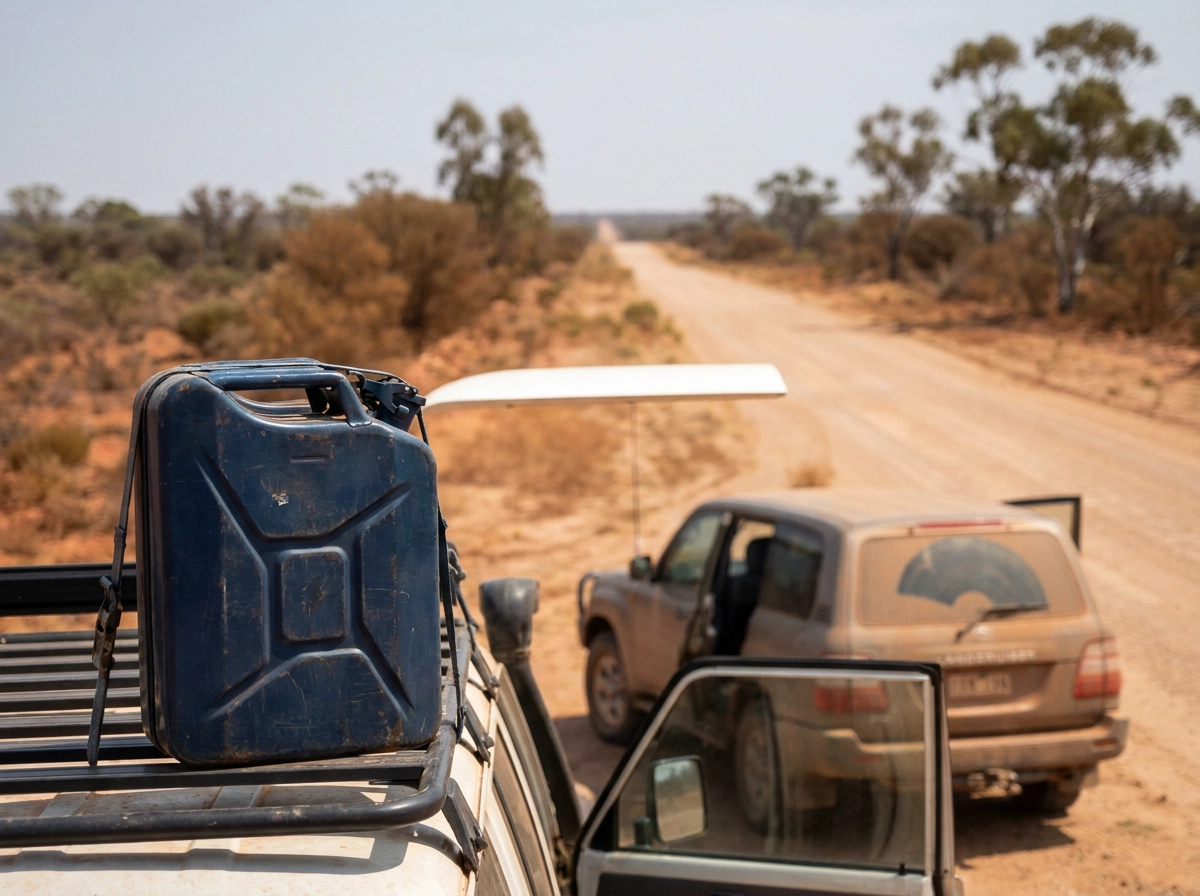
Group travel has its own coordination challenges, but Australian road trips introduce a different kind of pressure altogether. The distances here are genuinely vast. The stretch from Adelaide to Darwin is roughly 3,000 kilometres, and long sections of major outback routes pass through areas where the nearest town is hours away. A wrong turn, a flat tyre, or an unplanned overnight stop can take you well off your original route without any easy way to let someone know.
Attaching EzyTag to your vehicle or trailer means someone back home can follow your actual path, not just assume you’re still on it. If you detour, they see it. If you stop unexpectedly, there’s a location reference rather than silence.
Keeping that tracking data flowing depends on your connectivity. EzySim runs on the Vodafone network, which now reaches 99% of the population and extends into regional corridors through a network-sharing agreement. For eligible plans, data rollover means any leftover data from a lighter month carries forward, so you’re not burning through fresh data from scratch on day one of a long trip.
For serious road-trippers running navigation, streaming, and continuous EzyTag location updates simultaneously, the Beast plan or higher-tier options like Ultimate, Legend, or Titan give you the headroom to run everything without rationing.
The no-lock-in structure is worth flagging here too. Seasonal road-trippers can activate a plan before they leave and skip paying for connectivity during the months they’re not travelling. If you’re weighing up your options, choosing a prepaid SIM card in Australia is a straightforward process once you know what your trip actually needs.
A Word on Privacy: Your Location Data Stays Yours
Tracking your belongings is genuinely useful. But it is fair to ask: who else can see that location data?
It is a reasonable question, and Australian consumers are right to raise it. Research from 6wResearch identifies data privacy as one of the key concerns slowing GPS adoption locally, so it is worth addressing directly rather than brushing past.
EzyTag is built for personal use by the owner of the device. Your location data is yours to access; it is not broadcast to third parties or stored in ways that expose your information to others. You see where your tag is. That is the point.
There is also a practical privacy benefit to using a dedicated prepaid SIM like EzySim specifically for tracking, rather than routing everything through your primary account. Keeping your personal communications and your tracking data on separate connections gives you a clean layer of separation. If one connection is ever compromised, the other remains independent.
It also helps to understand what EzyTag is not. Commercial fleet tracking systems, which account for around 42% of the global GPS market according to Future Market Insights, operate under very different frameworks. They involve employer oversight, regulatory reporting, and third-party data access by design. Personal tracker use is an entirely different category, with the individual owner in control throughout.
The short version: responsible use of EzyTag means you decide who sees what. The technology works for you, on your terms.

What Does the Combined Setup Actually Cost?
Privacy sorted. Now let’s talk dollars.
Many travellers assume that combining a tracker with a connectivity plan means doubling their costs. The numbers suggest otherwise.
Consider what international roaming typically costs: anywhere from $10 to $15 per day on a standard carrier plan. Over a 30-day trip, that adds up to $300 to $450 in connectivity alone. By contrast, the EzySim Cool plan delivers 60GB over 90 days for $39, which works out to roughly $0.43 per day. If you’ve been wondering whether Telstra prepaid recharges still offer fair value after their May 2026 price hikes, that per-day comparison is worth sitting with.
On the hardware side, EzyTag benefits from a meaningful shift in the underlying technology. GNSS chipset costs have fallen approximately 38% since 2021 (Market Research Future), which has pushed consumer tracking hardware into genuinely affordable territory. This isn’t a budget compromise; it’s an industry-wide cost reduction landing in your favour.
EzySim’s no-lock-in structure adds another layer of savings. You activate a plan for the trip, and stop paying when you’re home. No contract ticking over through months when the SIM is sitting in a drawer.
Put it together and the EzyTag and EzySim combination functions as a single travel toolkit, one purchase decision, one setup, one active period. That’s a cleaner and cheaper outcome than managing a roaming plan and a standalone tracker subscription side by side.
How to Set Up Your EzyTag Travel Kit Before You Leave
Now that you know the setup is affordable, here is how to get everything working before you leave home.
- Pick the right EzySim plan for your trip. A short domestic weekend away suits a lighter tier like the Sweet 10GB for $19. A longer international trip calls for more headroom; the Cool 60GB/90 Days for $39 keeps you covered across a full multi-week journey without watching the data meter. Match the plan to the trip length first, then data needs.
- Activate your SIM or eSIM online before you pack. EzySim’s online activation takes minutes, and you can do it days ahead. If you are not sure which format suits your device, the guide on prepaid mobile plans and whether an eSIM or physical SIM is the better fit will sort that quickly. Do not leave this for the airport.
- Pair EzyTag with your active EzySim plan at home. Once your plan is live, connect your EzyTag and confirm location data is transmitting before you travel. Testing at home means no surprises once you are abroad.
- Attach EzyTag to your highest-risk item first. For international travellers, that is checked luggage. After that, prioritise a hire vehicle or expensive gear.
- Run a connectivity check 24 hours before departure. Confirm your EzySim plan is active, EzyTag is paired and sending location updates, and you know how to pull up that data from your phone. One check the day before beats troubleshooting at the gate.
Travel Smarter, Not Harder
Once your kit is prepped and ready to go, the rest is simple.
EzyTag and EzySim aren’t two products you happen to pack together. They’re a single travel solution: connectivity enables the tracking, and tracking delivers the peace of mind that makes travel genuinely enjoyable rather than quietly stressful.
Every scenario covered in this guide illustrates that same point. Checked baggage going astray, hired gear left unattended, a group splitting up at a festival, a long road trip through remote Australia: each one is solved more effectively by the integrated setup than by either tool working alone.
The affordability case is equally straightforward. Prepaid plans, no lock-in contracts, generous data, and simple online activation make EzySim the natural connectivity layer for EzyTag. And if you want the same Vodafone network coverage with even more flexibility, it’s worth seeing how EzySim compares to standard Vodafone plans before you commit.
Ready to get started? Browse EzySim’s current plans and consider the Cool 60GB/90 Days for $39 as your starting point; it covers most trip lengths without breaking the budget. Add EzyTag, and your travel kit is complete.
Conclusion
Smart travel comes down to preparation, and the EzyTag and EzySim combination makes that preparation straightforward. Together, they solve the problems most travellers don’t think about until something goes wrong: lost luggage, unattended hired gear, scattered groups, and remote stretches with no signal.
The key takeaways are simple. Reliable connectivity makes real-time tracking possible. Real-time tracking removes the anxiety that quietly undermines so many trips. And an affordable, no-lock-in setup means there is no reason to leave home without both.
Whether you are hopping a short domestic flight or crossing the country by road, this duo has you covered before, during, and after your journey.
Pick your EzySim plan, pair your EzyTag, and travel with the confidence that comes from knowing exactly where your gear is at all times. Your next trip deserves that peace of mind.